
CLASS 12 BIOLOGY · CHAPTER 6 · READ
EvolutionविकासEvolution
Origin of the universe and earth → origin of life (Oparin–Haldane, Miller) → Darwin's theory → evidences (fossils, homology–analogy, moths, resistance) → adaptive radiation → biological evolution and mechanism → Hardy–Weinberg principle → brief history of life → origin and evolution of man. NCERT order, simple words.ब्रह्मांड और पृथ्वी की उत्पत्ति → जीवन की उत्पत्ति (ओपेरिन–हाल्डेन, मिलर) → डार्विन का सिद्धांत → विकास के प्रमाण (जीवाश्म, समजातता–समवृत्तिता, शलभ, प्रतिरोध) → अनुकूली विकिरण → जैव विकास और उसकी क्रियाविधि → हार्डी–वेनबर्ग सिद्धांत → जीवन का संक्षिप्त इतिहास → मानव की उत्पत्ति और विकास। NCERT के क्रम में, आसान भाषा में।Universe aur earth ka origin → life ka origin (Oparin–Haldane, Miller) → Darwin ki theory → evolution ke evidences (fossils, homology–analogy, moths, resistance) → adaptive radiation → biological evolution aur mechanism → Hardy–Weinberg principle → life ki short history → insaan ka origin aur evolution. NCERT order, simple bhasha.
Didn’t understand a paragraph? Tap it (or its अ button) → हिंदी / Hinglish / Simple English.कोई पैराग्राफ़ समझ नहीं आया? उस पर (या अ बटन पर) टैप करें → English / Hinglish / Simple English।Koi paragraph samajh nahi aaya? Us par (ya अ button par) tap karo → हिंदी / English / Simple English.
Diagrams in this chapterइस अध्याय के डायग्राम
 Miller's experiment (1953)मिलर का प्रयोग (1953)Fig 6.1
 Homologous organs: vertebrate forelimbsसमजात अंग: कशेरुकियों के अग्रपादFig 6.3 (b)
 White- and dark-winged moths (England)सफ़ेद और गहरे पंखों वाले शलभ (इंग्लैंड)Fig 6.4
 Darwin's finches — adaptive radiationडार्विन की फिंच — अनुकूली विकिरणFig 6.5
 Adaptive radiation of Australian marsupialsऑस्ट्रेलियाई मार्सुपियल का अनुकूली विकिरणFig 6.6
 Convergent evolution: placental vs marsupial look-alikesअभिसारी विकास: अपरा स्तनधारी और मार्सुपियल हमशक्लFig 6.7
 Three types of natural selectionप्राकृतिक चयन के तीन प्रकारFig 6.8
 Origin and evolution of man (NCERT 6.9)मानव की उत्पत्ति और विकास (NCERT 6.9)Section 6.9
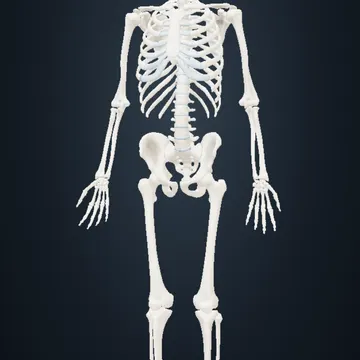 Human skeleton3D model ↗
In this chapter (NCERT sections)इस अध्याय में (NCERT खंड)
- 6.1Origin of Lifeजीवन की उत्पत्तिLife ka Origin
- 6.2Evolution of Life Forms – A Theoryजीवन स्वरूपों का विकास — एक सिद्धांतLife Forms ka Evolution — Ek Theory
- 6.3What are the Evidences for Evolution?विकास के प्रमाण क्या हैं?Evolution ke Evidences kya hain?
- 6.4What is Adaptive Radiation?अनुकूली विकिरण क्या है?Adaptive Radiation kya hai?
- 6.5Biological Evolutionजैव विकासBiological Evolution
- 6.6Mechanism of Evolutionविकास की क्रियाविधिEvolution ka Mechanism
- 6.7Hardy–Weinberg Principleहार्डी–वेनबर्ग सिद्धांतHardy–Weinberg Principle
- 6.8A Brief Account of Evolutionविकास का संक्षिप्त विवरणEvolution ka Short Account
- 6.9Origin and Evolution of Manमानव की उत्पत्ति और विकासInsaan ka Origin aur Evolution
6.1Origin of Lifeजीवन की उत्पत्तिLife ka Origin
Evolutionary biology is the study of evolution — the history of life forms on earth. To understand it we must start with the origin of the earth, the stars and the universe itself. When we look at stars at night we are, in a way, looking back in time — their light started its journey millions of years ago. The universe is about 13.8 billion years old and is made of huge clusters of galaxies. The Big Bang theory says it began with one huge explosion; as it expanded it cooled, and hydrogen and helium formed later. The gases condensed under gravity into galaxies.विकासीय जीवविज्ञान (Evolutionary Biology) पृथ्वी पर जीवों के इतिहास का अध्ययन है। इसे समझने के लिए पृथ्वी, तारों और पूरे ब्रह्मांड की उत्पत्ति से शुरू करना पड़ता है। रात में तारे देखना एक तरह से अतीत में झाँकना है — उनका प्रकाश लाखों वर्ष पहले चला था। ब्रह्मांड लगभग 13.8 अरब वर्ष पुराना है और आकाशगंगाओं के विशाल समूहों से बना है। बिग बैंग सिद्धांत (Big Bang theory) कहता है कि इसकी शुरुआत एक महाविस्फोट से हुई; फैलने के साथ यह ठंडा हुआ और बाद में हाइड्रोजन और हीलियम बने। गैसें गुरुत्व से सिमटकर आकाशगंगाएँ बनीं।Evolutionary biology matlab earth par life forms ki history ki study. Isko samajhne ke liye earth, stars aur poore universe ke origin se start karna padta hai. Raat mein stars dekhna ek tarah se past mein jhaankna hai — unki light laakhon saal pehle chali thi. Universe lagbhag 13.8 billion saal purana hai aur galaxies ke huge clusters se bana hai. Big Bang theory kehti hai ki shuruaat ek bade explosion se hui; universe phaila, thanda hua aur baad mein hydrogen aur helium bane. Gases gravity se condense hokar galaxies bani.Evolutionary biology studies the history of life on earth. It starts with how the universe began. Starlight is very old, so looking at stars is like looking into the past. The universe is about 13.8 billion years old. The Big Bang theory says it began with a huge explosion. It cooled as it spread, and hydrogen, helium and then galaxies formed.
The earth was formed about 4.5 billion years ago in the solar system of the Milky Way galaxy. Early earth had no atmosphere. Water vapour, methane, carbon dioxide and ammonia came out of the molten mass. UV rays from the sun broke water into hydrogen and oxygen; the light H₂ escaped. Oxygen combined with ammonia and methane to form water, CO₂ and others, and the ozone layer formed. As earth cooled, water vapour fell as rain and filled the hollows to form oceans. Life appeared about 500 million years after earth formed — almost four billion years ago.मिल्की वे आकाशगंगा के सौरमंडल में पृथ्वी लगभग 4.5 अरब वर्ष पहले बनी। आरंभिक पृथ्वी पर कोई वायुमंडल नहीं था। पिघले हुए पदार्थ से जलवाष्प, मेथेन, कार्बन डाइऑक्साइड और अमोनिया निकले। सूर्य की पराबैंगनी (UV) किरणों ने पानी को हाइड्रोजन और ऑक्सीजन में तोड़ा; हल्की H₂ बाहर निकल गई। ऑक्सीजन ने अमोनिया और मेथेन से मिलकर पानी, CO₂ आदि बनाए और ओज़ोन परत बनी। पृथ्वी ठंडी हुई तो जलवाष्प वर्षा बनकर गड्ढों में भरी और महासागर बने। पृथ्वी बनने के लगभग 50 करोड़ वर्ष बाद — यानी लगभग चार अरब वर्ष पहले — जीवन प्रकट हुआ।Milky Way galaxy ke solar system mein earth lagbhag 4.5 billion saal pehle bani. Shuru ki earth par koi atmosphere nahi tha. Molten mass se water vapour, methane, CO₂ aur ammonia nikle. Sun ki UV rays ne paani ko hydrogen aur oxygen mein toda; halki H₂ escape ho gayi. Oxygen ne ammonia aur methane ke saath milkar paani, CO₂ wagairah banaye aur ozone layer bani. Earth thandi hui to water vapour baarish bankar gaddhon mein bhara aur oceans bane. Earth banne ke ~500 million saal baad — yaani lagbhag 4 billion saal pehle — life aayi.The earth formed about 4.5 billion years ago. At first it had no air layer. Gases like water vapour, methane, CO₂ and ammonia came out. Sunlight (UV) split water; hydrogen escaped. The ozone layer formed. Rain filled the low places and made oceans. Life appeared about 4 billion years ago.
Where did life come from? Some scientists believe it came from outer space. Early Greek thinkers said units of life called spores were transferred to different planets — this idea, panspermia, is still a favourite of some astronomers. For a long time people also believed in spontaneous generation — life coming out of decaying matter like straw and mud. Louis Pasteur disproved it: in pre-sterilised flasks no life came from killed yeast, but in a flask open to air new organisms arose. So life comes only from pre-existing life. But this still did not explain how the first life came.जीवन आया कहाँ से? कुछ वैज्ञानिक मानते हैं कि यह बाहरी अंतरिक्ष से आया। प्राचीन यूनानी विचारकों के अनुसार जीवन की इकाइयाँ — बीजाणु (spores) — अलग-अलग ग्रहों पर पहुँचीं; यह विचार पैनस्पर्मिया आज भी कुछ खगोलविदों को पसंद है। लंबे समय तक लोग स्वतःजनन (Spontaneous generation) भी मानते थे — कि जीवन भूसे, कीचड़ जैसे सड़ते पदार्थ से पैदा होता है। लुई पाश्चर ने इसे ग़लत सिद्ध किया: पहले से निर्जीवीकृत (स्टरलाइज़) फ्लास्क में मारे गए यीस्ट से कोई जीवन नहीं आया, पर हवा के लिए खुले फ्लास्क में नए जीव पैदा हुए। यानी जीवन केवल पहले से मौजूद जीवन से आता है। पर इससे यह नहीं पता चला कि पहला जीवन कैसे आया।Life aayi kahaan se? Kuch scientists maante hain ki ye outer space se aayi. Purane Greek thinkers ke hisaab se life ke units — spores — alag planets par pahunche; ye idea panspermia aaj bhi kuch astronomers ko pasand hai. Bahut time tak log spontaneous generation bhi maante the — ki life straw, mud jaisi sadti cheezon se apne aap banti hai. Louis Pasteur ne ise galat prove kiya: pre-sterilised flask mein killed yeast se koi life nahi aayi, par hawa ke liye khule flask mein naye organisms aa gaye. Matlab life sirf pehle se maujood life se aati hai. Par isse ye pata nahi chala ki pehli life kaise aayi.Did life come from space? Some think so (the panspermia idea). People also once believed life comes from rotting things like straw and mud. Louis Pasteur showed this was wrong. In a sterilised, closed flask nothing grew. In a flask open to air, living things appeared. So life comes only from earlier life.
Oparin of Russia and Haldane of England proposed that the first life could have come from pre-existing non-living organic molecules (e.g. RNA, protein), and that life was preceded by chemical evolution — the formation of diverse organic molecules from inorganic constituents. Conditions on early earth were high temperature, volcanic storms and a reducing atmosphere containing CH₄, NH₃, etc.रूस के ओपेरिन और इंग्लैंड के हाल्डेन ने बताया कि पहला जीवन पहले से मौजूद निर्जीव कार्बनिक अणुओं (जैसे RNA, प्रोटीन) से आया होगा, और जीवन से पहले रासायनिक विकास (Chemical evolution) हुआ — यानी अकार्बनिक पदार्थों से तरह-तरह के कार्बनिक अणु बने। तब पृथ्वी पर ऊँचा तापमान, ज्वालामुखीय तूफ़ान और अपचायक वायुमंडल (CH₄, NH₃ आदि वाला) था।Russia ke Oparin aur England ke Haldane ne kaha ki pehli life pehle se maujood non-living organic molecules (jaise RNA, protein) se aayi hogi, aur life se pehle chemical evolution hua — yaani inorganic cheezon se tarah-tarah ke organic molecules bane. Tab earth par high temperature, volcanic storms aur reducing atmosphere (CH₄, NH₃ wagairah) tha.Oparin (Russia) and Haldane (England) said the first life came from non-living organic molecules like RNA and protein. Before life, simple inorganic chemicals joined to make organic molecules. This is chemical evolution. Early earth was very hot, stormy and had gases like methane and ammonia.
In 1953, the American scientist S.L. Miller created similar conditions in the laboratory Miller's experiment NCERT Fig 6.1. He made an electric discharge in a closed flask containing CH₄, H₂, NH₃ and water vapour at 800 °C and observed the formation of amino acids. In similar experiments others found sugars, nitrogen bases, pigment and fats. Meteorites also contain similar compounds, so such processes may be happening elsewhere in space too. With this limited evidence, chemical evolution was more or less accepted.1953 में अमेरिकी वैज्ञानिक एस.एल. मिलर ने प्रयोगशाला में ऐसी ही दशाएँ बनाईं मिलर का प्रयोग NCERT Fig 6.1। उन्होंने एक बंद फ्लास्क में CH₄, H₂, NH₃ और जलवाष्प को 800 °C पर रखकर विद्युत विसर्जन (चिंगारी) किया और अमीनो अम्ल बनते देखे। ऐसे ही प्रयोगों में दूसरों को शर्करा, नाइट्रोजन क्षारक, वर्णक और वसा भी मिले। उल्कापिंडों में भी ऐसे यौगिक मिले हैं, यानी अंतरिक्ष में भी ऐसा हो रहा होगा। इन सीमित प्रमाणों से रासायनिक विकास लगभग मान लिया गया।1953 mein American scientist S.L. Miller ne lab mein waisi hi conditions banayi Miller's experiment NCERT Fig 6.1. Unhone ek closed flask mein CH₄, H₂, NH₃ aur water vapour ko 800 °C par rakhkar electric discharge (spark) diya aur amino acids bante dekhe. Aise hi experiments mein doosron ko sugars, nitrogen bases, pigment aur fats bhi mile. Meteorites mein bhi aise compounds mile hain, matlab space mein bhi aisa ho raha hoga. In limited evidences se chemical evolution lagbhag maan liya gaya.In 1953 S.L. Miller copied early-earth conditions in a lab. He put CH₄, H₂, NH₃ and water vapour in a closed flask at 800 °C and passed electric sparks. Amino acids formed. Others later got sugars, nitrogen bases, pigments and fats. Meteorites have such compounds too.
Miller's experiment (1953)मिलर का प्रयोग (1953)Miller's experiment (1953)NCERT Fig 6.1 · 10 tappable parts · 5 stepsOpenWe still have no idea how the first self-replicating metabolic capsule of life arose. The first non-cellular forms of life could have originated about 3 billion years ago — giant molecules like RNA, protein and polysaccharides that perhaps reproduced themselves. The first cellular form of life did not possibly originate till about 2000 million years ago; these were probably single cells, and all life lived in water only. This view — that the first life arose slowly through evolutionary forces from non-living molecules — is accepted by the majority.पहला स्वयं-प्रतिकृति करने वाला, उपापचय वाला जीवन-कैप्सूल कैसे बना — यह हमें आज तक नहीं पता। पहले अकोशिकीय जीव रूप लगभग 3 अरब वर्ष पहले बने होंगे — RNA, प्रोटीन, पॉलीसैकेराइड जैसे विशाल अणु, जो शायद अपनी प्रतियाँ बनाते थे। पहला कोशिकीय जीवन शायद लगभग 2000 मिलियन (200 करोड़) वर्ष पहले बना; ये संभवतः एककोशिकीय थे और सारा जीवन केवल पानी में था। यह विचार — कि पहला जीवन निर्जीव अणुओं से विकास की शक्तियों द्वारा धीरे-धीरे बना — ज़्यादातर वैज्ञानिक मानते हैं।Pehla self-replicating, metabolism wala life capsule kaise bana — ye humein aaj tak nahi pata. Pehle non-cellular life forms lagbhag 3 billion saal pehle bane honge — RNA, protein, polysaccharides jaise giant molecules, jo shayad apni copies banate the. Pehli cellular life shayad lagbhag 2000 million saal pehle bani; ye probably single cells the aur saari life sirf paani mein thi. Ye view — ki pehli life non-living molecules se evolutionary forces dwara dheere-dheere bani — zyadatar scientists maante hain.Nobody knows exactly how the first living capsule formed. The first non-cellular life (giant molecules like RNA and proteins) may be 3 billion years old. The first cells came about 2000 million years ago. They were single cells living only in water. Most scientists accept that life slowly arose from non-living molecules.
6.2Evolution of Life Forms – A Theoryजीवन स्वरूपों का विकास — एक सिद्धांतLife Forms ka Evolution — Ek Theory
Conventional religious literature gives the theory of special creation. It has three ideas: (i) all living organisms we see today were created as such; (ii) the diversity was always the same since creation and will stay the same; (iii) the earth is about 4000 years old. All these ideas were strongly challenged in the nineteenth century.पारंपरिक धार्मिक साहित्य विशेष सृष्टि का सिद्धांत (Theory of special creation) बताता है। इसके तीन अर्थ हैं: (i) आज दिखने वाले सभी जीव ऐसे ही बनाए गए; (ii) सृष्टि के समय से विविधता हमेशा एक जैसी रही है और आगे भी रहेगी; (iii) पृथ्वी लगभग 4000 वर्ष पुरानी है। उन्नीसवीं सदी में इन सभी विचारों को ज़ोरदार चुनौती मिली।Purane religious granth special creation ki theory batate hain. Iske teen matlab hain: (i) aaj ke saare living organisms aise hi banaye gaye; (ii) creation se diversity hamesha same rahi aur aage bhi same rahegi; (iii) earth lagbhag 4000 saal purani hai. 19th century mein in sab ideas ko strong challenge mila.The old special creation theory said: all living things were made just as they are now, diversity never changes, and the earth is about 4000 years old. Scientists challenged all three ideas in the 1800s.
Charles Darwin sailed round the world on the ship H.M.S. Beagle. From his observations he concluded that living forms share similarities with each other and with life forms that lived millions of years ago; many of those no longer exist (extinctions), while new forms arose at different times. So there has been gradual evolution of life forms. Every population has built-in variation; those whose characteristics help them survive better in natural conditions (climate, food, physical factors) outbreed the less-endowed ones. Darwin's fitness means ultimately and only reproductive fitness — the fitter leave more progeny, so nature selects them. He called this natural selection and saw it as the mechanism of evolution. Alfred Wallace, a naturalist working in the Malay Archipelago, reached similar conclusions around the same time.चार्ल्स डार्विन ने एच.एम.एस. बीगल जहाज़ से दुनिया की समुद्री यात्रा की। अपने अवलोकनों से उन्होंने निष्कर्ष निकाला कि जीव आपस में और लाखों वर्ष पहले के जीवों से भी कुछ हद तक मिलते-जुलते हैं; उनमें से कई अब नहीं हैं (विलुप्ति), और अलग-अलग समय पर नए रूप बने। यानी जीवों का धीरे-धीरे विकास हुआ है। हर समष्टि में अंतर्निहित विभिन्नता होती है; जिनके लक्षण उन्हें प्राकृतिक दशाओं (जलवायु, भोजन, भौतिक कारक) में बेहतर जीने देते हैं, वे कम सक्षम सदस्यों से ज़्यादा प्रजनन करते हैं। डार्विन की योग्यता (Fitness) का अर्थ अंततः केवल जनन योग्यता है — अधिक योग्य ज़्यादा संतति छोड़ते हैं, इसलिए प्रकृति उन्हें चुनती है। इसे उन्होंने प्राकृतिक चयन (Natural selection) कहा और विकास की क्रियाविधि माना। मलय द्वीपसमूह में काम करने वाले प्रकृतिविद अल्फ़्रेड वैलेस भी लगभग उसी समय ऐसे ही निष्कर्ष पर पहुँचे।Charles Darwin ne H.M.S. Beagle ship se duniya ki sea voyage ki. Observations se unhone conclude kiya ki living forms aapas mein aur laakhon saal pehle ke life forms se bhi kuch had tak milte-julte hain; unme se kai ab nahi hain (extinctions), aur alag-alag time par naye forms bane. Yaani life ka gradual evolution hua hai. Har population mein built-in variation hota hai; jinke characters unhe natural conditions (climate, food, physical factors) mein better survive karne dete hain, wo kam capable members se zyada breed karte hain. Darwin ki fitness ka matlab sirf reproductive fitness — fitter log zyada progeny chhodte hain, isliye nature unhe select karti hai. Isko unhone natural selection kaha aur evolution ka mechanism maana. Malay Archipelago mein kaam karne wale naturalist Alfred Wallace bhi usi time same conclusion par pahunche.Darwin travelled round the world on the ship H.M.S. Beagle. He saw that living things resemble each other and also ancient, now-extinct forms. So life changed slowly. Members of a population differ. Those better suited to their surroundings have more young ones. Darwin called this natural selection. Fitness means leaving more offspring. Alfred Wallace reached the same idea at the same time.
Over time, apparently new types of organisms become recognisable. All existing life forms share similarities and common ancestors, but these ancestors lived at different periods of earth's history (epochs, periods and eras). The geological history of earth closely matches its biological history. A fair conclusion: the earth is billions of years old, not thousands.समय के साथ नए प्रकार के जीव पहचान में आने लगते हैं। सभी मौजूदा जीव आपस में समानताएँ और साझा पूर्वज रखते हैं, पर ये पूर्वज पृथ्वी के इतिहास के अलग-अलग कालों (युग, कल्प, महाकल्प) में थे। पृथ्वी का भूवैज्ञानिक इतिहास उसके जैविक इतिहास से गहराई से मेल खाता है। सही निष्कर्ष: पृथ्वी हज़ारों नहीं, अरबों वर्ष पुरानी है।Time ke saath naye types ke organisms pehchaan mein aane lagte hain. Saare existing life forms similarities aur common ancestors share karte hain, par ye ancestors earth ki history ke alag-alag time (epochs, periods, eras) mein the. Earth ki geological history uski biological history se closely match karti hai. Sahi conclusion: earth hazaaron nahi, billions saal purani hai.Slowly, new kinds of living things appear. All living things share common ancestors who lived in different eras. Earth's rock history matches its life history. So the earth is billions of years old, not a few thousand.
6.3What are the Evidences for Evolution?विकास के प्रमाण क्या हैं?Evolution ke Evidences kya hain?
Fossils — fossils are remains of hard parts of life forms found in rocks. Rocks form sediments laid one over the other through earth's long history. Rock layers of different ages hold fossils of different life forms that probably died when that layer formed. Some look like modern organisms; others are extinct (e.g. dinosaurs) (NCERT Fig 6.2: a family tree of dinosaurs and their living counterparts, crocodiles and birds). Fossils show that life forms changed over time and certain forms are limited to certain geological time-spans — new forms arose at different times. This is paleontological evidence. (The age of a fossil is found by radioactive dating.)जीवाश्म — जीवाश्म (Fossils) चट्टानों में मिले जीवों के कठोर भागों के अवशेष हैं। पृथ्वी के लंबे इतिहास में चट्टानें अवसाद की परतों के रूप में एक के ऊपर एक जमीं। अलग-अलग उम्र की परतों में अलग-अलग जीवों के जीवाश्म हैं, जो शायद उसी परत के बनते समय मरे। कुछ आज के जीवों जैसे दिखते हैं, कुछ विलुप्त हैं (जैसे डायनासोर) (NCERT Fig 6.2: डायनासोर का वंश-वृक्ष और उनके आज के रिश्तेदार, मगरमच्छ और पक्षी)। जीवाश्म बताते हैं कि जीव समय के साथ बदले और कुछ रूप कुछ ख़ास भूवैज्ञानिक कालों तक ही सीमित रहे — नए रूप अलग-अलग समय पर बने। इसे जीवाश्मिकी प्रमाण (Paleontological evidence) कहते हैं। (जीवाश्म की आयु रेडियोधर्मी काल-निर्धारण से निकाली जाती है।)Fossils — fossils rocks mein mile living beings ke hard parts ke remains hain. Earth ki lambi history mein rocks sediments ki layers bankar ek ke upar ek jamti gayi. Alag age ki layers mein alag life forms ke fossils hain, jo shayad usi layer ke bante time mare. Kuch aaj ke organisms jaise dikhte hain, kuch extinct hain (jaise dinosaurs) (NCERT Fig 6.2: dinosaurs ka family tree aur unke aaj ke relatives, crocodiles aur birds). Fossils dikhate hain ki life forms time ke saath badle aur kuch forms kuch geological time-spans tak hi rahe — naye forms alag time par aaye. Ise paleontological evidence kehte hain. (Fossil ki age radioactive dating se nikalte hain.)Fossils are hard remains of old living things found in rocks. Rocks form in layers, oldest at the bottom. Each layer has its own fossils. Some look like animals of today; some are extinct, like dinosaurs. So life has changed over time. This is fossil (paleontological) evidence.
Embryological support for evolution was proposed by Ernst Haeckel. He noted features common to all vertebrate embryos that are absent in adults — e.g. embryos of all vertebrates, including humans, develop a row of vestigial gill slits behind the head, but these are functional only in fish. This proposal was disapproved by Karl Ernst von Baer, who noted that embryos never pass through the adult stages of other animals.भ्रूणविज्ञान से विकास का समर्थन अर्न्स्ट हेकल ने दिया। उन्होंने देखा कि सभी कशेरुकियों के भ्रूण में कुछ लक्षण होते हैं जो वयस्क में नहीं होते — जैसे मनुष्य समेत सभी कशेरुकियों के भ्रूण में सिर के पीछे अवशेषी क्लोम छिद्रों (गिल स्लिट) की एक पंक्ति बनती है, पर ये केवल मछली में काम करते हैं। कार्ल अर्न्स्ट वॉन बेयर ने ध्यान से अध्ययन करके इसे अस्वीकार कर दिया: उन्होंने बताया कि भ्रूण दूसरे जंतुओं की वयस्क अवस्थाओं से कभी नहीं गुज़रते।Embryology se evolution ka support Ernst Haeckel ne diya. Unhone dekha ki saare vertebrates ke embryos mein kuch features hote hain jo adult mein nahi hote — jaise insaan samet saare vertebrates ke embryo mein sir ke peeche vestigial gill slits ki ek row banti hai, par ye sirf fish mein kaam karti hain. Karl Ernst von Baer ne dhyan se study karke ise reject kar diya: embryos doosre animals ki adult stages se kabhi nahi guzarte.Haeckel said all vertebrate embryos look alike early on — for example, all have gill slits behind the head, though only fish use them as adults. Karl Ernst von Baer rejected this. He showed embryos never pass through the adult stages of other animals.
Comparative anatomy and morphology show similarities and differences among organisms of today and of the past. Whales, bats, cheetahs and humans (all mammals) share the same pattern of bones in their forelimbs NCERT Fig 6.3b: all have humerus, radius, ulna, carpals, metacarpals and phalanges see the forelimbs (human arm bones in 3D: humerus3D). The functions differ, but the anatomy is the same — the same structure developed in different directions to suit different needs. This is divergent evolution, and such structures are homologous. Homology indicates common ancestry. Other examples: vertebrate hearts and brains; in plants, the thorn of Bougainvillea and the tendril of Cucurbita NCERT Fig 6.3a.तुलनात्मक शारीरिकी और आकारिकी आज के और पुराने जीवों की समानताएँ और अंतर दिखाती है। व्हेल, चमगादड़, चीता और मनुष्य (सभी स्तनधारी) के अग्रपादों में हड्डियों का एक ही ढाँचा है NCERT Fig 6.3b: सभी में ह्यूमरस, रेडियस, अल्ना, कार्पल्स, मेटाकार्पल्स और फैलेंजेस हैं अग्रपाद देखें (मनुष्य की बाँह की हड्डी 3D में: ह्यूमरस3D)। कार्य अलग हैं, पर रचना एक जैसी — एक ही संरचना अलग ज़रूरतों के लिए अलग दिशाओं में विकसित हुई। इसे अपसारी विकास (Divergent evolution) कहते हैं, और ऐसी संरचनाएँ समजात (Homologous) हैं। समजातता साझा पूर्वज की ओर इशारा करती है। अन्य उदाहरण: कशेरुकियों के हृदय और मस्तिष्क; पौधों में बोगनवेलिया का काँटा और कुकरबिटा (कद्दू) का प्रतान NCERT Fig 6.3a।Comparative anatomy aur morphology aaj ke aur purane organisms ki similarities aur differences dikhati hai. Whale, bat, cheetah aur human (sab mammals) ke forelimbs mein bones ka same pattern hai NCERT Fig 6.3b: sabme humerus, radius, ulna, carpals, metacarpals aur phalanges hain forelimbs dekho (insaan ki arm bone 3D mein: humerus3D). Kaam alag hai, par structure same — ek hi structure alag needs ke liye alag directions mein develop hua. Ye divergent evolution hai, aur aise structures homologous hain. Homology common ancestry dikhati hai. Aur examples: vertebrates ke heart aur brain; plants mein Bougainvillea ka thorn aur Cucurbita ka tendril NCERT Fig 6.3a.Whale, bat, cheetah and human forelimbs do different jobs — swimming, flying, running, holding. But inside they have the same bones: humerus, radius, ulna, carpals, metacarpals and phalanges. Same plan, different use = homologous organs. They show a common ancestor. This is divergent evolution. Plant example: Bougainvillea thorn and Cucurbita tendril.
Homologous organs: vertebrate forelimbsसमजात अंग: कशेरुकियों के अग्रपादHomologous organs: vertebrate forelimbsNCERT Fig 6.3 (b) · 6 tappable partsOpenAnalogy is exactly the opposite. The wings of a butterfly and of a bird look alike and do the same job, but they are not anatomically similar. Such analogous structures result from convergent evolution — different structures evolving for the same function. Other examples: the eye of the octopus and of mammals, the flippers of penguins and dolphins, and sweet potato (root modification) and potato (stem modification). A similar habitat selects similar adaptive features in different groups.समवृत्तिता (Analogy) इसका ठीक उल्टा है। तितली और पक्षी के पंख एक जैसे दिखते हैं और एक ही काम करते हैं, पर इनकी रचना एक जैसी नहीं है। ऐसी समवृत्ति (Analogous) संरचनाएँ अभिसारी विकास (Convergent evolution) का परिणाम हैं — अलग-अलग संरचनाएँ एक ही कार्य के लिए विकसित हुईं। अन्य उदाहरण: ऑक्टोपस और स्तनधारियों की आँख, पेंगुइन और डॉल्फ़िन के फ्लिपर, और शकरकंद (रूपांतरित जड़) व आलू (रूपांतरित तना)। एक जैसा आवास अलग-अलग समूहों में एक जैसे अनुकूली लक्षण चुन लेता है।Analogy iska bilkul ulta hai. Butterfly aur bird ke wings same dikhte hain aur same kaam karte hain, par inki anatomy same nahi hai. Aise analogous structures convergent evolution ka result hain — alag structures same function ke liye evolve hue. Aur examples: octopus aur mammals ki aankh, penguin aur dolphin ke flippers, aur sweet potato (root modification) aur potato (stem modification). Same habitat alag groups mein same adaptive features select kar leta hai.Analogous organs are the opposite. A butterfly wing and a bird wing both fly but are built differently. Different build, same job = analogous organs, made by convergent evolution. More examples: octopus eye and human eye, penguin and dolphin flippers, sweet potato (a root) and potato (a stem).
In the same way, similarities in proteins and genes that do a given function in diverse organisms give clues to common ancestry. These biochemical similarities point to the same shared ancestry as the structural similarities do.इसी तरह, अलग-अलग जीवों में एक ही काम करने वाले प्रोटीनों और जीनों की समानता भी साझा पूर्वज के संकेत देती है। ये जैव-रासायनिक समानताएँ भी रचनात्मक समानताओं की तरह उसी साझा पूर्वज की ओर इशारा करती हैं।Isi tarah, alag organisms mein same kaam karne wale proteins aur genes ki similarity bhi common ancestry ka clue deti hai. Ye biochemical similarities bhi structural similarities ki tarah same ancestor ki taraf ishara karti hain.Similar proteins and genes doing the same job in different organisms also show they share ancestors. This is biochemical evidence.
Man has bred selected plants and animals for agriculture, horticulture, sport or security, and domesticated many wild animals and crops. This intensive breeding created breeds that differ from other breeds (e.g. dogs) but are still the same group. The argument: if man could create new breeds within hundreds of years, could nature not do the same over millions of years?मनुष्य ने कृषि, बागवानी, खेल या सुरक्षा के लिए चुने हुए पौधों और जंतुओं का प्रजनन कराया और कई जंगली जंतुओं व फ़सलों को पालतू बनाया। इस गहन प्रजनन से ऐसी नस्लें बनीं जो दूसरी नस्लों से अलग हैं (जैसे कुत्ते) पर फिर भी उसी समूह की हैं। तर्क यह है: अगर मनुष्य कुछ सौ वर्षों में नई नस्लें बना सकता है, तो क्या प्रकृति लाखों वर्षों में ऐसा नहीं कर सकती?Insaan ne agriculture, horticulture, sport ya security ke liye chune hue plants aur animals ki breeding karayi aur kai wild animals aur crops ko domesticate kiya. Is intensive breeding se aisi breeds bani jo doosri breeds se alag hain (jaise dogs) par phir bhi same group ki hain. Argument ye hai: agar insaan kuch sau saal mein nayi breeds bana sakta hai, to kya nature laakhon saal mein aisa nahi kar sakti?People bred dogs, crops and other animals and got very different breeds in a few hundred years. If humans can do this so fast, nature can surely make big changes over millions of years.
Another observation supporting evolution by natural selection comes from England see the moths NCERT Fig 6.4. In a collection of moths made in the 1850s, before industrialisation, there were more white-winged moths on trees than dark-winged (melanised) moths. In a collection from the same area after industrialisation, in 1920, there were more dark-winged moths — the proportion was reversed.प्राकृतिक चयन द्वारा विकास का एक और प्रमाण इंग्लैंड से मिलता है शलभ देखें NCERT Fig 6.4। 1850 के दशक में, औद्योगीकरण से पहले, इकट्ठे किए गए शलभों (मॉथ) में पेड़ों पर गहरे पंखों वाले (मेलानीकृत) शलभों से ज़्यादा सफ़ेद पंखों वाले शलभ थे। उसी क्षेत्र में औद्योगीकरण के बाद, 1920 में, ज़्यादा गहरे पंखों वाले शलभ मिले — अनुपात उलट गया।Natural selection se evolution ka ek aur proof England se aata hai moths dekho NCERT Fig 6.4. 1850s mein, industrialisation se pehle, collect kiye moths mein trees par dark-winged (melanised) moths se zyada white-winged moths the. Usi area mein industrialisation ke baad, 1920 mein, zyada dark-winged moths mile — ratio ulta ho gaya.In England in the 1850s, before factories, most moths on trees were white-winged. In 1920, after factories came, most moths in the same area were dark-winged. The numbers had flipped.
White- and dark-winged moths (England)सफ़ेद और गहरे पंखों वाले शलभ (इंग्लैंड)White- and dark-winged moths (England)NCERT Fig 6.4 · 4 tappable partsOpenThe explanation: predators spot a moth against a contrasting background. After industrialisation, tree trunks became dark with industrial smoke and soot, so white-winged moths were eaten and dark-winged moths survived. Before industrialisation, a thick growth of almost white lichen covered the trees; on that background white moths survived and dark moths were picked out. Lichens are industrial pollution indicators — they do not grow in polluted areas. So moths that could camouflage (hide in the background) survived. In rural areas without industry, the count of melanic moths stayed low. In a mixed population, the better-adapted survive and increase — but remember, no variant is completely wiped out.इसका कारण: शिकारी विपरीत रंग की पृष्ठभूमि पर शलभ को आसानी से देख लेते हैं। औद्योगीकरण के बाद पेड़ों के तने कारख़ानों के धुएँ और कालिख से काले हो गए, इसलिए सफ़ेद शलभ खा लिए गए और गहरे शलभ बच गए। औद्योगीकरण से पहले पेड़ों पर लगभग सफ़ेद लाइकेन की मोटी परत थी; उस पर सफ़ेद शलभ बचे और गहरे शलभ पकड़े गए। लाइकेन औद्योगिक प्रदूषण के सूचक हैं — ये प्रदूषित जगह पर नहीं उगते। यानी जो शलभ पृष्ठभूमि में छिप (छद्मावरण) सके, वे बचे। जिन ग्रामीण क्षेत्रों में उद्योग नहीं थे, वहाँ गहरे (मेलानिक) शलभ कम ही रहे। मिली-जुली समष्टि में बेहतर अनुकूलित सदस्य बचते और बढ़ते हैं — पर याद रखिए, कोई भी प्रकार पूरी तरह ख़त्म नहीं होता।Reason: predators contrasting background par moth ko jaldi dekh lete hain. Industrialisation ke baad tree trunks factory ke dhuen aur soot se kaale ho gaye, to white moths kha liye gaye aur dark moths bach gaye. Industrialisation se pehle trees par almost white lichen ki moti layer thi; us par white moths bache aur dark moths pakde gaye. Lichens industrial pollution indicators hain — polluted jagah par nahi ugte. Matlab jo moths background mein camouflage kar sake, wo bache. Rural areas mein jahan industry nahi thi, melanic moths kam hi rahe. Mixed population mein better adapted survive karke badhte hain — par yaad rakho, koi variant poora khatam nahi hota.Birds easily see a moth that stands out. Soot made tree trunks dark, so white moths were seen and eaten, and dark moths hid. Before, pale lichen covered trunks, so white moths hid and dark ones were eaten. Lichens die in pollution. In villages without factories, dark moths stayed few. Neither type vanished completely.
Similarly, excess use of herbicides and pesticides has selected resistant varieties in a much shorter time. The same is true for microbes against which we use antibiotics, and for eukaryotic cells against which we use drugs. Resistant organisms appear in months or years, not centuries. These are examples of evolution by anthropogenic action. They also show that evolution is not a directed process in the sense of determinism; it is a stochastic process based on chance events in nature and chance mutations in organisms.इसी तरह, खरपतवारनाशी और पीड़कनाशी के अधिक उपयोग से बहुत कम समय में प्रतिरोधी किस्में चुन ली गईं। यही बात उन सूक्ष्मजीवों पर लागू है जिन पर हम प्रतिजैविक (एंटीबायोटिक) इस्तेमाल करते हैं, और उन यूकैरियोटिक कोशिकाओं पर भी जिन पर दवाएँ इस्तेमाल होती हैं। प्रतिरोधी जीव सदियों में नहीं, महीनों या वर्षों में आ जाते हैं। ये मानवोद्भवी क्रिया (Anthropogenic action) से विकास के उदाहरण हैं। ये यह भी दिखाते हैं कि विकास कोई पहले से तय दिशा वाली प्रक्रिया नहीं है; यह प्रकृति की संयोगवश घटनाओं और जीवों में संयोगवश उत्परिवर्तनों पर आधारित प्रसंभाव्य (स्टोकैस्टिक) प्रक्रिया है।Isi tarah, herbicides aur pesticides ke zyada use se bahut kam time mein resistant varieties select ho gayi. Yahi baat un microbes par bhi hai jin par hum antibiotics use karte hain, aur un eukaryotic cells par bhi jin par drugs use hoti hain. Resistant organisms centuries mein nahi, months ya years mein aa jaate hain. Ye anthropogenic action se evolution ke examples hain. Ye bhi dikhata hai ki evolution koi pehle se fixed direction wali process nahi hai; ye nature ke chance events aur organisms ke chance mutations par based stochastic process hai.Spraying too much weed-killer and pesticide has quickly produced resistant weeds and pests. Overusing antibiotics produces resistant germs. This happens in months or years. Humans caused it (anthropogenic action). It also shows evolution is not planned — it depends on chance.
6.4What is Adaptive Radiation?अनुकूली विकिरण क्या है?Adaptive Radiation kya hai?
On his journey Darwin visited the Galapagos Islands and saw an amazing diversity of creatures. Small black birds, later called Darwin's finches, amazed him: there were many varieties of finches on the same island, and he guessed they all evolved on the island itself. From the original seed-eating type, many forms with altered beaks arose, becoming insectivorous and vegetarian finches NCERT Fig 6.5. This evolution of different species in a given geographical area, starting from a point and literally radiating to other habitats, is called adaptive radiation. Darwin's finches are one of the best examples.अपनी यात्रा में डार्विन गैलापैगोस द्वीप गए और वहाँ जीवों की अद्भुत विविधता देखी। छोटे काले पक्षियों — जिन्हें बाद में डार्विन की फिंच कहा गया — ने उन्हें हैरान किया: एक ही द्वीप पर फिंच की कई किस्में थीं, और उन्होंने अनुमान लगाया कि ये सब उसी द्वीप पर विकसित हुईं। मूल बीज खाने वाली फिंच से बदली हुई चोंच वाले कई रूप बने, जो कीटभक्षी और शाकाहारी फिंच बन गए NCERT Fig 6.5। किसी एक भौगोलिक क्षेत्र में एक बिंदु से शुरू होकर दूसरे आवासों में फैलते हुए अलग-अलग जातियों का विकास अनुकूली विकिरण (Adaptive radiation) कहलाता है। डार्विन की फिंच इसका सबसे अच्छा उदाहरण हैं।Apni journey mein Darwin Galapagos Islands gaye aur wahan creatures ki amazing diversity dekhi. Chhote kaale birds — jinhe baad mein Darwin's finches kaha gaya — ne unhe hairaan kiya: ek hi island par finches ki kai varieties thi, aur unhone guess kiya ki ye sab usi island par evolve hui. Original seed-eating finch se badli hui beak wale kai forms bane, jo insectivorous aur vegetarian finches ban gaye NCERT Fig 6.5. Ek geographical area mein ek point se shuru hokar doosre habitats mein phailte hue alag species ka evolution adaptive radiation kehlata hai. Darwin's finches iska best example hain.On the Galapagos Islands Darwin found many kinds of small black finches on one island. All came from one seed-eating finch. Their beaks changed for different foods — some became insect-eaters, some plant-eaters. One ancestor spreading into many habitats and forming many species is called adaptive radiation.
Darwin's finches — adaptive radiationडार्विन की फिंच — अनुकूली विकिरणDarwin's finches — adaptive radiationNCERT Fig 6.5 · 4 tappable parts · 2 stepsOpenAnother example is the Australian marsupials see the marsupials NCERT Fig 6.6. A number of marsupials, each different from the other, evolved from an ancestral stock — all within the Australian island continent.दूसरा उदाहरण ऑस्ट्रेलियाई शिशुधानी (मार्सुपियल) स्तनधारी हैं मार्सुपियल देखें NCERT Fig 6.6। एक-दूसरे से अलग कई मार्सुपियल एक ही पूर्वज स्टॉक से विकसित हुए — और सब ऑस्ट्रेलिया महाद्वीप-द्वीप के अंदर ही।Doosra example Australian marsupials (pouch wale mammals) hain marsupials dekho NCERT Fig 6.6. Ek doosre se alag kai marsupials ek hi ancestral stock se evolve hue — sab Australian island continent ke andar hi.Australia's pouched mammals (marsupials) are another example. Many very different marsupials came from one ancestor, all inside Australia.
Adaptive radiation of Australian marsupialsऑस्ट्रेलियाई मार्सुपियल का अनुकूली विकिरणAdaptive radiation of Australian marsupialsNCERT Fig 6.6 · 11 tappable parts · 2 stepsOpenWhen more than one adaptive radiation appears to have occurred in an isolated geographical area (with different habitats), one can call this convergent evolution. Placental mammals in Australia also show adaptive radiation, evolving into varieties each of which looks 'similar' to a corresponding marsupial — e.g. the placental wolf and the Tasmanian wolf (a marsupial) see the pairs NCERT Fig 6.7.जब किसी अलग-थलग भौगोलिक क्षेत्र (जिसमें अलग-अलग आवास हों) में एक से ज़्यादा अनुकूली विकिरण हुए दिखें, तो इसे अभिसारी विकास कह सकते हैं। ऑस्ट्रेलिया के अपरा स्तनधारियों (Placental mammals) में भी अनुकूली विकिरण हुआ, और उनकी हर किस्म किसी न किसी मार्सुपियल जैसी 'दिखती' है — जैसे अपरा भेड़िया और तस्मानियन वुल्फ़ (मार्सुपियल) जोड़े देखें NCERT Fig 6.7।Jab kisi isolated area (alag-alag habitats wale) mein ek se zyada adaptive radiation hua dikhe, to ise convergent evolution keh sakte hain. Australia ke placental mammals mein bhi adaptive radiation hua, aur unki har variety kisi marsupial jaisi 'dikhti' hai — jaise placental wolf aur Tasmanian wolf (marsupial) pairs dekho NCERT Fig 6.7.In Australia, placental mammals also spread into many habitats. Each one ended up looking like a matching marsupial — for example, the placental wolf and the Tasmanian wolf. When two such radiations give look-alikes, we call it convergent evolution.
Convergent evolution: placental vs marsupial look-alikesअभिसारी विकास: अपरा स्तनधारी और मार्सुपियल हमशक्लConvergent evolution: placental vs marsupial look-alikesNCERT Fig 6.7 · 7 tappable partsOpen6.5Biological Evolutionजैव विकासBiological Evolution
Evolution by natural selection, in a true sense, would have started when cellular forms of life with differences in metabolic capability appeared on earth. The essence of Darwin's theory is natural selection. The rate of appearance of new forms is linked to the life cycle or life span. Microbes that divide fast become millions within hours. Suppose a bacterial colony A has built-in variation in using a food component. If the medium changes, only the part of the population (B) that can survive the new conditions comes out on top; in time this variant outgrows the others and appears as a new species — within days. The same in a fish or fowl would take millions of years, because their life spans are in years. Here the fitness of B is better than that of A under the new conditions: nature selects for fitness.सच्चे अर्थ में प्राकृतिक चयन द्वारा विकास तब शुरू हुआ होगा जब पृथ्वी पर अलग-अलग उपापचयी क्षमता वाले कोशिकीय जीव बने। डार्विन के सिद्धांत का सार है प्राकृतिक चयन। नए रूपों के बनने की दर जीवन-चक्र या जीवन-काल से जुड़ी है। तेज़ी से विभाजित होने वाले सूक्ष्मजीव कुछ घंटों में लाखों हो जाते हैं। मान लीजिए जीवाणुओं की कॉलोनी A में किसी भोजन-घटक के उपयोग की क्षमता में विभिन्नता है। माध्यम बदलने पर केवल वह हिस्सा (B) आगे आता है जो नई दशा में जी सके; समय के साथ यह बाक़ियों से आगे निकलकर नई जाति जैसा दिखता है — कुछ ही दिनों में। मछली या मुर्ग़ी में यही होने में लाखों वर्ष लगेंगे, क्योंकि उनका जीवन-काल वर्षों का है। यहाँ नई दशा में B की योग्यता A से बेहतर है: प्रकृति योग्यता का चयन करती है।Sach mein natural selection se evolution tab shuru hua hoga jab earth par alag metabolic capability wale cellular life forms bane. Darwin ki theory ka core hai natural selection. Naye forms banne ki speed life cycle ya life span se judi hai. Jaldi divide hone wale microbes kuch ghanton mein millions ho jaate hain. Maan lo bacteria ki colony A mein kisi food component ko use karne ki capability mein variation hai. Medium badla to sirf wo hissa (B) aage aata hai jo nayi condition mein survive kar sake; time ke saath ye baaki sab se aage nikalkar nayi species jaisa dikhta hai — kuch hi dinon mein. Fish ya fowl mein yahi hone mein millions saal lagenge, kyunki unki life span saalon ki hai. Yahan nayi condition mein B ki fitness A se better hai: nature fitness select karti hai.Natural selection began once cells with different abilities appeared. How fast new forms appear depends on life span. Bacteria multiply in hours. If their food changes, only the bacteria that can use the new food (B) survive and take over — in days. For fish or birds the same change takes millions of years. Nature picks the fitter ones.
This fitness is based on characteristics that are inherited — there must be a genetic basis for getting selected and evolving. In other words, some organisms are better adapted to survive in an otherwise hostile environment; adaptive ability is inherited. Fitness is the end result of the ability to adapt and get selected by nature. Branching descent and natural selection are the two key concepts of Darwin's theory of evolution.यह योग्यता वंशागत लक्षणों पर आधारित है — चयनित होने और विकसित होने का आनुवंशिक आधार होना ज़रूरी है। दूसरे शब्दों में, कुछ जीव कठिन वातावरण में जीने के लिए बेहतर अनुकूलित होते हैं; अनुकूलन की क्षमता वंशागत होती है। योग्यता अनुकूलन की क्षमता और प्रकृति द्वारा चुने जाने का अंतिम परिणाम है। शाखित अवतरण (Branching descent) और प्राकृतिक चयन — ये डार्विन के विकास सिद्धांत की दो मुख्य अवधारणाएँ हैं।Ye fitness inherited characters par based hai — select hone aur evolve hone ka genetic basis hona zaroori hai. Doosre shabdon mein, kuch organisms mushkil environment mein survive karne ke liye better adapted hote hain; adapt karne ki ability inherited hoti hai. Fitness adapt karne ki ability aur nature dwara select hone ka end result hai. Branching descent aur natural selection — ye Darwin ki theory ke do key concepts hain.Fitness comes from traits passed down from parents. So selection needs a genetic basis. The ability to adapt is inherited. Darwin's two key ideas: branching descent (many forms from one ancestor) and natural selection.
Even before Darwin, the French naturalist Lamarck said evolution happened, but driven by the use and disuse of organs. His example: giraffes stretching to reach leaves on tall trees got longer necks and passed this acquired character to the next generations, so over the years giraffes came to have long necks. Nobody believes this conjecture any more.डार्विन से पहले ही फ़्रांसीसी प्रकृतिविद लैमार्क ने कहा था कि विकास हुआ है, पर यह अंगों के उपयोग और अनुपयोग से हुआ। उनका उदाहरण: जिराफ़ ऊँचे पेड़ों की पत्तियाँ खाने के लिए गर्दन खींचते रहे, उनकी गर्दन लंबी हुई और यह उपार्जित लक्षण अगली पीढ़ियों में गया, इसलिए धीरे-धीरे जिराफ़ों की गर्दन लंबी हो गई। आज इस अनुमान को कोई नहीं मानता।Darwin se pehle hi French naturalist Lamarck ne kaha tha ki evolution hua hai, par organs ke use aur disuse se. Unka example: giraffes oonche trees ki leaves khane ke liye gardan kheenchte rahe, gardan lambi hui aur ye acquired character agli generations mein gaya, to dheere-dheere giraffes ki gardan lambi ho gayi. Aaj is idea ko koi nahi maanta.Lamarck (France) said organs grow with use and shrink without use, and such changes pass to children. Example: giraffes stretching their necks. Nobody accepts this idea now.
Is evolution a process or the result of a process? The world we see, non-living and living, is only the success stories of evolution. When we describe the story of this world, we treat evolution as a process; when we describe the story of life on earth, we treat evolution as a consequence of natural selection. We are still not very clear which way to regard them.विकास एक प्रक्रिया है या किसी प्रक्रिया का परिणाम? हमें दिखने वाली निर्जीव और सजीव दुनिया विकास की सफलता की कहानियाँ ही है। जब हम इस दुनिया की कहानी बताते हैं तो विकास को प्रक्रिया मानते हैं; जब पृथ्वी पर जीवन की कहानी बताते हैं तो विकास को प्राकृतिक चयन का परिणाम मानते हैं। अभी तक यह पूरी तरह साफ़ नहीं है कि इन्हें किस रूप में देखें।Evolution ek process hai ya kisi process ka result? Jo duniya hum dekhte hain, non-living aur living, wo evolution ki success stories hi hai. Jab duniya ki story batate hain to evolution ko process maante hain; jab earth par life ki story batate hain to evolution ko natural selection ka result maante hain. Abhi tak ye poori tarah clear nahi hai.Is evolution a process or a result? Both views are used. Everything we see today is a success story of evolution. Scientists are still not fully sure which view is right.
The work of Thomas Malthus on populations may have influenced Darwin. Natural selection rests on facts: natural resources are limited; population sizes are stable except for seasonal fluctuation; members of a population vary (no two individuals are alike); and most variations are inherited. In theory a population would grow exponentially if all reproduced maximally (as a growing bacterial culture shows), but real populations are limited — so there must be competition for resources. Only some survive. Darwin's brilliant insight: heritable variations that make resource use better let only those few reproduce and leave more progeny. Over many generations the population's characteristics change and new forms appear to arise.समष्टि पर थॉमस माल्थस के काम ने शायद डार्विन को प्रभावित किया। प्राकृतिक चयन कुछ तथ्यों पर टिका है: प्राकृतिक संसाधन सीमित हैं; मौसमी उतार-चढ़ाव के अलावा समष्टि का आकार स्थिर रहता है; समष्टि के सदस्यों में विभिन्नता होती है (कोई दो सदस्य बिल्कुल एक जैसे नहीं); और ज़्यादातर विभिन्नताएँ वंशागत होती हैं। अगर सब अधिकतम प्रजनन करें तो समष्टि चरघातांकी (exponential) रूप से बढ़ेगी (जैसे बढ़ती जीवाणु कॉलोनी में), पर असल में समष्टि सीमित रहती है — यानी संसाधनों के लिए प्रतिस्पर्धा हुई। कुछ ही बचे। डार्विन की शानदार समझ: जो वंशागत विभिन्नताएँ संसाधनों का बेहतर उपयोग कराती हैं, वही कुछ सदस्य प्रजनन करके ज़्यादा संतति छोड़ते हैं। कई पीढ़ियों में समष्टि के लक्षण बदल जाते हैं और नए रूप बनते दिखते हैं।Population par Thomas Malthus ke kaam ne shayad Darwin ko influence kiya. Natural selection kuch facts par based hai: natural resources limited hain; seasonal ups-downs ke alawa population size stable rehta hai; members mein variation hota hai (koi do bilkul same nahi); aur zyadatar variations inherited hote hain. Agar sab maximum reproduce karein to population exponentially badhegi (jaise growing bacteria mein), par asal mein population limited rehti hai — matlab resources ke liye competition hua. Kuch hi bache. Darwin ki brilliant insight: jo heritable variations resources ka better use karwate hain, wahi kuch members reproduce karke zyada progeny chhodte hain. Kai generations mein population ke characters badal jaate hain aur naye forms bante dikhte hain.Malthus's ideas may have helped Darwin. Facts: resources are limited, populations stay about the same size, members differ, and most differences are inherited. So there is competition. Those with useful inherited traits survive and have more young. Over many generations the population changes and new forms appear.
6.6Mechanism of Evolutionविकास की क्रियाविधिEvolution ka Mechanism
What is the origin of this variation, and how does speciation occur? Mendel had talked of inheritable 'factors', but Darwin either ignored these observations or kept silent. In the first decade of the twentieth century, Hugo de Vries, working on the evening primrose, brought forth the idea of mutations — large differences arising suddenly in a population. He believed it is mutation that causes evolution, not the minor heritable variations Darwin talked about.इस विभिन्नता का स्रोत क्या है, और जाति-उद्भवन (Speciation) कैसे होता है? मेंडल ने वंशागत 'कारकों' की बात की थी, पर डार्विन ने या तो इन पर ध्यान नहीं दिया या चुप रहे। बीसवीं सदी के पहले दशक में ह्यूगो डी व्रीज़ ने इवनिंग प्रिमरोज़ (सांध्य प्रिमरोज़) पर काम करके उत्परिवर्तन (Mutation) का विचार दिया — समष्टि में अचानक आने वाले बड़े अंतर। उनका मानना था कि विकास उत्परिवर्तन से होता है, डार्विन की बताई छोटी वंशागत विभिन्नताओं से नहीं।Is variation ka source kya hai, aur speciation kaise hota hai? Mendel ne inheritable 'factors' ki baat ki thi, par Darwin ne ya to inhe ignore kiya ya chup rahe. 20th century ke pehle decade mein Hugo de Vries ne evening primrose par kaam karke mutations ka idea diya — population mein achanak aane wale bade differences. Unka maanna tha ki evolution mutation se hota hai, Darwin ke chhote heritable variations se nahi.Where do variations come from, and how do new species form? Hugo de Vries studied the evening primrose in the early 1900s. He said sudden, large changes called mutations cause evolution, not Darwin's small variations.
Mutations are random and directionless, while Darwinian variations are small and directional. For Darwin evolution was gradual; de Vries believed mutation caused speciation and called it saltation (single-step large mutation). Later, studies in population genetics brought some clarity.उत्परिवर्तन यादृच्छिक और दिशाहीन होते हैं, जबकि डार्विन की विभिन्नताएँ छोटी और दिशात्मक होती हैं। डार्विन के लिए विकास धीमा, क्रमिक था; डी व्रीज़ के अनुसार उत्परिवर्तन से जाति-उद्भवन होता है और इसे उन्होंने साल्टेशन (एकल पद बृहत् उत्परिवर्तन) कहा। बाद में समष्टि आनुवंशिकी (Population genetics) के अध्ययनों से बात कुछ साफ़ हुई।Mutations random aur directionless hote hain, jabki Darwin ke variations chhote aur directional hote hain. Darwin ke liye evolution gradual tha; de Vries ke hisaab se mutation se speciation hota hai aur ise unhone saltation (single-step bada mutation) kaha. Baad mein population genetics ki studies se baat kuch clear hui.Mutations are random and have no direction. Darwin's variations are small and have a direction. Darwin thought evolution is slow. De Vries thought one big mutation can make a new species (saltation). Population genetics later made this clearer.
6.7Hardy–Weinberg Principleहार्डी–वेनबर्ग सिद्धांतHardy–Weinberg Principle
In a population we can find the frequency of alleles of a gene or locus. This frequency is supposed to stay fixed through generations, and the Hardy–Weinberg principle states it with algebraic equations: allele frequencies in a population are stable and constant from generation to generation. The gene pool (total genes and their alleles in a population) stays constant — this is called genetic equilibrium. The sum total of all allelic frequencies is 1.किसी समष्टि में हम किसी जीन या लोकस के युग्मविकल्पियों (एलील) की आवृत्ति निकाल सकते हैं। यह आवृत्ति पीढ़ियों तक स्थिर मानी जाती है, और हार्डी–वेनबर्ग सिद्धांत इसे बीजगणितीय समीकरणों से बताता है: समष्टि में युग्मविकल्पी आवृत्तियाँ स्थिर रहती हैं और पीढ़ी-दर-पीढ़ी नहीं बदलतीं। जीन कोश (Gene pool — समष्टि के सभी जीन और उनके एलील) स्थिर रहता है — इसे आनुवंशिक संतुलन (Genetic equilibrium) कहते हैं। सभी युग्मविकल्पी आवृत्तियों का योग 1 होता है।Kisi population mein hum kisi gene ya locus ke alleles ki frequency nikaal sakte hain. Ye frequency generations tak fixed maani jaati hai, aur Hardy–Weinberg principle ise algebra ke equations se batata hai: population mein allele frequencies stable rehti hain aur generation dar generation nahi badalti. Gene pool (population ke saare genes aur unke alleles) constant rehta hai — ise genetic equilibrium kehte hain. Saari allelic frequencies ka total 1 hota hai.We can count how common each allele (gene form) is in a population. The Hardy–Weinberg principle says these allele frequencies stay the same in every generation. The gene pool stays constant. This is genetic equilibrium. All allele frequencies add up to 1.
Name the frequencies p and q: in a diploid, p = frequency of allele A, q = frequency of allele a. The frequency of AA individuals is simply p² (the chance that A, with frequency p, is on both chromosomes = p × p). Similarly aa = q² and Aa = 2pq. Hence p² + 2pq + q² = 1 — the binomial expansion of (p + q)². When the measured frequency differs from the expected value, the difference (and its direction) shows the extent of evolutionary change. A disturbance of the Hardy–Weinberg equilibrium — a change in allele frequency in a population — is interpreted as evolution.आवृत्तियों को p और q नाम दीजिए: द्विगुणित (diploid) में p = एलील A की आवृत्ति, q = एलील a की आवृत्ति। AA सदस्यों की आवृत्ति सीधे p² है (A, जिसकी आवृत्ति p है, के दोनों गुणसूत्रों पर होने की प्रायिकता = p × p)। इसी तरह aa = q² और Aa = 2pq। इसलिए p² + 2pq + q² = 1 — यह (p + q)² का द्विपद प्रसार है। जब मापी गई आवृत्ति अपेक्षित मान से अलग हो, तो यह अंतर (और उसकी दिशा) विकासीय बदलाव की मात्रा बताता है। हार्डी–वेनबर्ग संतुलन का बिगड़ना — यानी समष्टि में एलील आवृत्ति का बदलना — विकास माना जाता है।Frequencies ko p aur q naam do: diploid mein p = allele A ki frequency, q = allele a ki frequency. AA individuals ki frequency seedha p² hai (A ke dono chromosomes par hone ki probability = p × p). Isi tarah aa = q² aur Aa = 2pq. Isliye p² + 2pq + q² = 1 — ye (p + q)² ka binomial expansion hai. Jab measured frequency expected value se alag ho, to ye difference (aur direction) evolutionary change kitna hua batata hai. Hardy–Weinberg equilibrium bigadna — yaani population mein allele frequency badalna — evolution maana jaata hai.Let p = frequency of allele A and q = frequency of allele a, so p + q = 1. Then AA = p², Aa = 2pq, aa = q², and p² + 2pq + q² = 1. If real numbers differ from these expected values, the population is evolving.
Five factors are known to affect Hardy–Weinberg equilibrium:हार्डी–वेनबर्ग संतुलन को पाँच कारक प्रभावित करते हैं:Hardy–Weinberg equilibrium ko paanch factors affect karte hain:Five things can upset this balance:
- Gene migration or gene flow — part of a population moves to another place and population.जीन प्रवासन या जीन प्रवाह — समष्टि का एक हिस्सा दूसरी जगह और दूसरी समष्टि में चला जाता है।Gene migration ya gene flow — population ka ek hissa doosri jagah aur doosri population mein chala jaata hai.Gene flow — some members move to another population.
- Genetic drift — allele frequency changes by chance.आनुवंशिक विचलन (Genetic drift) — एलील आवृत्ति संयोग से बदल जाती है।Genetic drift — allele frequency chance se badal jaati hai.Genetic drift — gene frequencies change by pure chance.
- Mutation — new alleles arise.उत्परिवर्तन (Mutation) — नए एलील बनते हैं।Mutation — naye alleles bante hain.Mutation — new gene forms appear.
- Genetic recombination — new combinations during gametogenesis.आनुवंशिक पुनर्योग (Genetic recombination) — युग्मकजनन के समय नए संयोजन।Genetic recombination — gametogenesis ke time naye combinations.Recombination — genes get mixed in new ways when gametes form.
- Natural selection — heritable variations that help survival leave more progeny.प्राकृतिक चयन — जीने में मदद करने वाली वंशागत विभिन्नताएँ ज़्यादा संतति छोड़ती हैं।Natural selection — survival mein help karne wale heritable variations zyada progeny chhodte hain.Natural selection — the better-suited leave more young.
When a section of a population migrates to another place and population, gene frequencies change in both the original and the new population: new genes/alleles are added to the new population and lost from the old one. If this gene migration happens many times, there is gene flow. If the same change happens by chance, it is genetic drift. Sometimes the change in allele frequency in the new sample is so different that it becomes a different species; the original drifted population becomes founders, and this is the founder effect.जब समष्टि का कोई हिस्सा दूसरी जगह और समष्टि में जाता है, तो मूल और नई दोनों समष्टियों में जीन आवृत्तियाँ बदलती हैं: नए जीन/एलील नई समष्टि में जुड़ते हैं और पुरानी से घटते हैं। अगर यह जीन प्रवासन बार-बार हो, तो जीन प्रवाह (Gene flow) होता है। अगर यही बदलाव संयोग से हो, तो यह आनुवंशिक विचलन (Genetic drift) है। कभी-कभी नए नमूने में एलील आवृत्ति इतनी बदल जाती है कि वह अलग जाति बन जाता है; मूल विचलित समष्टि संस्थापक (founders) बनती है, और इसे संस्थापक प्रभाव (Founder effect) कहते हैं।Jab population ka koi hissa doosri jagah aur population mein jaata hai, to original aur nayi dono populations mein gene frequencies badalti hain: naye genes/alleles nayi population mein jud jaate hain aur purani se kam ho jaate hain. Agar ye gene migration baar-baar ho, to gene flow hota hai. Agar yahi change chance se ho, to ye genetic drift hai. Kabhi-kabhi naye sample mein allele frequency itni badal jaati hai ki wo alag species ban jaata hai; original drifted population founders banti hai, aur ise founder effect kehte hain.When some members move to a new place, gene frequencies change in both groups. If this happens again and again, it is gene flow. If the change is by chance, it is genetic drift. Sometimes the small moved group becomes so different that it forms a new species. Its first members are founders — the founder effect.
Microbial experiments show that pre-existing advantageous mutations, when selected, give new phenotypes; over a few generations this results in speciation. Natural selection is a process in which heritable variations enabling better survival are enabled to reproduce and leave more progeny. Variation due to mutation, recombination during gametogenesis, gene flow or genetic drift changes the frequency of genes and alleles in future generations; coupled with better reproductive success, natural selection makes it look like a different population.सूक्ष्मजीवों पर प्रयोग बताते हैं कि पहले से मौजूद लाभदायक उत्परिवर्तन चुने जाने पर नए लक्षणप्ररूप (phenotype) दिखते हैं; कुछ पीढ़ियों में इससे जाति-उद्भवन हो जाता है। प्राकृतिक चयन वह प्रक्रिया है जिसमें बेहतर जीने में मदद करने वाली वंशागत विभिन्नताओं को प्रजनन करने और ज़्यादा संतति छोड़ने का मौका मिलता है। उत्परिवर्तन, युग्मकजनन के समय पुनर्योग, जीन प्रवाह या आनुवंशिक विचलन से आई विभिन्नता आने वाली पीढ़ियों में जीन और एलील की आवृत्ति बदल देती है; बेहतर जनन-सफलता के साथ मिलकर प्राकृतिक चयन इसे एक अलग समष्टि जैसा बना देता है।Microbial experiments dikhate hain ki pehle se maujood advantageous mutations select hone par naye phenotypes dikhte hain; kuch generations mein isse speciation ho jaata hai. Natural selection wo process hai jisme better survival dene wale heritable variations ko reproduce karne aur zyada progeny chhodne ka mauka milta hai. Mutation, gametogenesis ke time recombination, gene flow ya genetic drift se aaya variation aane wali generations mein genes aur alleles ki frequency badal deta hai; better reproductive success ke saath natural selection ise ek alag population jaisa bana deta hai.In microbes, useful mutations that already exist get selected and new types appear in a few generations. Variation comes from mutation, recombination, gene flow and drift. Natural selection lets the best-suited have more young, so the population slowly becomes different.
Natural selection can lead to three outcomes NCERT Fig 6.8: stabilisation — more individuals acquire the mean character value; directional change — more individuals acquire a value other than the mean; and disruption — more individuals acquire peripheral values at both ends of the distribution curve.प्राकृतिक चयन के तीन परिणाम हो सकते हैं NCERT Fig 6.8: स्थायीकरण (Stabilising) — ज़्यादा सदस्य लक्षण का औसत मान पाते हैं; दिशात्मक बदलाव (Directional) — ज़्यादा सदस्य औसत से अलग मान पाते हैं; और विदारण (Disruptive) — ज़्यादा सदस्य वितरण वक्र के दोनों छोरों वाले मान पाते हैं।Natural selection ke teen results ho sakte hain NCERT Fig 6.8: stabilisation — zyada individuals character ki mean value paate hain; directional change — zyada individuals mean se alag value paate hain; aur disruption — zyada individuals distribution curve ke dono ends wali values paate hain.Natural selection works in three ways. Stabilising: the average type increases. Directional: one extreme type increases. Disruptive: both extreme types increase and the average decreases.
Three types of natural selectionप्राकृतिक चयन के तीन प्रकारThree types of natural selectionNCERT Fig 6.8 · 4 tappable parts · 2 stepsOpen6.8A Brief Account of Evolutionविकास का संक्षिप्त विवरणEvolution ka Short Account
About 2000 million years ago (mya) the first cellular forms of life appeared. How non-cellular aggregates of giant macromolecules became cells with a membrane envelope is not known. Some of these cells could release O₂ — probably like the light reaction of photosynthesis, where water is split using solar energy captured by light-harvesting pigments. Slowly single-celled organisms became multicellular. By 500 mya invertebrates were formed and active. Jawless fish probably evolved around 350 mya. Sea weeds and a few plants existed around 320 mya. The first organisms to invade land were plants; they were widespread on land when animals invaded land.लगभग 2000 मिलियन वर्ष पहले (mya) पहले कोशिकीय जीव बने। विशाल अणुओं के अकोशिकीय समूह झिल्ली वाली कोशिकाएँ कैसे बने — यह पता नहीं है। इनमें से कुछ कोशिकाएँ O₂ छोड़ सकती थीं — शायद प्रकाश-संश्लेषण की प्रकाश अभिक्रिया जैसे, जिसमें प्रकाश ग्रहण करने वाले वर्णकों द्वारा पकड़ी गई सौर ऊर्जा से पानी टूटता है। धीरे-धीरे एककोशिकीय जीव बहुकोशिकीय बने। 500 mya तक अकशेरुकी बन चुके थे और सक्रिय थे। जबड़ा-रहित मछलियाँ शायद 350 mya के आसपास विकसित हुईं। समुद्री शैवाल और कुछ पौधे लगभग 320 mya में थे। ज़मीन पर सबसे पहले पौधे पहुँचे; जब जंतु ज़मीन पर आए, तब तक पौधे वहाँ फैल चुके थे।Lagbhag 2000 million saal pehle (mya) pehli cellular life bani. Giant macromolecules ke non-cellular groups membrane wale cells kaise bane — ye pata nahi. Inme se kuch cells O₂ release kar sakte the — shayad photosynthesis ki light reaction jaise, jisme light-harvesting pigments ki pakdi solar energy se paani toot-ta hai. Dheere-dheere single-celled organisms multicellular bane. 500 mya tak invertebrates ban chuke the aur active the. Jawless fish shayad 350 mya ke aaspaas evolve hui. Sea weeds aur kuch plants lagbhag 320 mya mein the. Land par sabse pehle plants pahunche; jab animals land par aaye, tab tak plants phail chuke the.The first cells appeared about 2000 million years ago. Some began to release oxygen, like photosynthesis. Then many-celled life came. Invertebrates by 500 mya, jawless fish around 350 mya, seaweeds and a few plants around 320 mya. Plants reached land first; animals followed.
Fish with stout and strong fins could move on land and go back to water — about 350 mya. In 1938 a fish caught in South Africa turned out to be a Coelacanth, which was thought to be extinct. These animals, called lobefins, evolved into the first amphibians that lived on both land and water. No specimens of those are left, but they were the ancestors of modern frogs and salamanders. Amphibians evolved into reptiles, which lay thick-shelled eggs that do not dry up in the sun, unlike amphibian eggs. Their modern descendants are the turtles, tortoises and crocodiles.मज़बूत, मोटे पंखों (फ़िन) वाली मछलियाँ ज़मीन पर चल सकती थीं और पानी में लौट सकती थीं — लगभग 350 mya। 1938 में दक्षिण अफ़्रीका में पकड़ी गई एक मछली सीलाकैंथ निकली, जिसे विलुप्त माना जाता था। इन जंतुओं — लोबफ़िन (पालिपक्ष) — से पहले उभयचर विकसित हुए जो ज़मीन और पानी दोनों में रहते थे। उनका कोई नमूना नहीं बचा, पर वे आज के मेंढकों और सैलामैंडरों के पूर्वज थे। उभयचरों से सरीसृप बने, जो मोटे खोल वाले अंडे देते हैं जो उभयचरों के अंडों की तरह धूप में सूखते नहीं। उनके आज के वंशज कछुए (टर्टल, टॉरटॉइज़) और मगरमच्छ हैं।Strong, mote fins wali fish land par chal sakti thi aur paani mein laut sakti thi — lagbhag 350 mya. 1938 mein South Africa mein pakdi ek fish Coelacanth nikli, jise extinct maana jaata tha. In animals — lobefins — se pehle amphibians bane jo land aur paani dono mein rehte the. Unka koi specimen nahi bacha, par wo aaj ke frogs aur salamanders ke ancestors the. Amphibians se reptiles bane, jo mote shell wale eggs dete hain jo amphibians ke eggs ki tarah dhoop mein sookhte nahi. Unke aaj ke descendants turtles, tortoises aur crocodiles hain.About 350 mya, fish with strong fins could crawl on land. A Coelacanth caught in South Africa in 1938 was one such lobefin, once thought extinct. Lobefins gave rise to the first amphibians (ancestors of frogs and salamanders). Amphibians gave rise to reptiles, whose thick-shelled eggs do not dry up. Turtles, tortoises and crocodiles are reptiles of today.
For the next 200 million years or so, reptiles of different shapes and sizes dominated the earth. Giant ferns (pteridophytes) were present but fell and slowly formed coal deposits. Some land reptiles went back into water to become fish-like reptiles around 200 mya (e.g. Ichthyosaurs). The land reptiles were, of course, the dinosaurs; the biggest, *Tyrannosaurus rex*, was about 20 feet tall with huge, dagger-like teeth. About 65 mya the dinosaurs suddenly disappeared. We do not know the true reason — some say climatic changes killed them, some say most of them evolved into birds; the truth may lie in between. Small reptiles of that era still exist.अगले लगभग 20 करोड़ वर्षों तक अलग-अलग आकार के सरीसृप पृथ्वी पर छाए रहे। विशाल फ़र्न (टेरिडोफ़ाइट) थे, जो गिरकर धीरे-धीरे कोयले के भंडार बन गए। कुछ स्थलीय सरीसृप पानी में लौटकर लगभग 200 mya में मछली जैसे सरीसृप बने (जैसे इक्थियोसॉर)। ज़मीन के सरीसृप थे डायनासोर; सबसे बड़ा, *टायरेनोसॉरस रेक्स*, लगभग 20 फ़ुट ऊँचा था और उसके खंजर जैसे बड़े, डरावने दाँत थे। लगभग 65 mya डायनासोर अचानक ग़ायब हो गए। असली कारण पता नहीं — कुछ कहते हैं जलवायु बदलाव ने उन्हें मारा, कुछ कहते हैं ज़्यादातर पक्षियों में विकसित हो गए; सच शायद बीच में है। उस युग के छोटे सरीसृप आज भी हैं।Agle lagbhag 200 million saal tak alag-alag size ke reptiles earth par chhaye rahe. Giant ferns (pteridophytes) the, jo gir kar dheere-dheere coal deposits ban gaye. Kuch land reptiles paani mein wapas jaakar lagbhag 200 mya mein fish jaise reptiles bane (jaise Ichthyosaurs). Land ke reptiles the dinosaurs; sabse bada, *Tyrannosaurus rex*, lagbhag 20 feet uncha tha aur uske khanjar jaise bade daant the. Lagbhag 65 mya dinosaurs achanak gayab ho gaye. Asli reason pata nahi — kuch kehte hain climate change ne maara, kuch kehte hain zyadatar birds mein evolve ho gaye; sach shayad beech mein hai. Us time ke chhote reptiles aaj bhi hain.Reptiles ruled the earth for about 200 million years. Giant ferns fell and slowly became coal. Some reptiles went back to water (Ichthyosaurs, about 200 mya). Dinosaurs ruled land; T. rex was about 20 feet tall. Dinosaurs vanished about 65 mya — maybe climate change, maybe many became birds.
The first mammals were like shrews; their fossils are small. Mammals were viviparous and protected their unborn young inside the mother's body, and were more intelligent in sensing and avoiding danger. When reptiles declined, mammals took over. South America had mammals resembling horse, hippopotamus, bear, rabbit, etc.; due to continental drift, when South America joined North America these were overridden by North American fauna. Due to the same continental drift, the pouched mammals of Australia survived because there was no competition from other mammals. Some mammals live wholly in water — whales, dolphins, seals and sea cows. The most successful story is the evolution of man, with language skills and self-consciousness (NCERT Fig 6.9: plant forms through geological periods; NCERT Fig 6.10: vertebrates through geological periods).पहले स्तनधारी छछूँदर (श्रू) जैसे थे; उनके जीवाश्म छोटे हैं। स्तनधारी जरायुज (viviparous) थे और अजन्मे बच्चे को माँ के शरीर के अंदर सुरक्षित रखते थे, और ख़तरे को भाँपने व उससे बचने में ज़्यादा बुद्धिमान थे। सरीसृप घटे तो स्तनधारी छा गए। दक्षिण अमेरिका में घोड़े, दरियाई घोड़े, भालू, ख़रगोश जैसे स्तनधारी थे; महाद्वीपीय विस्थापन (Continental drift) से जब दक्षिण अमेरिका उत्तरी अमेरिका से जुड़ा, तो उत्तरी अमेरिकी जंतुओं ने इन्हें पीछे छोड़ दिया। इसी महाद्वीपीय विस्थापन के कारण ऑस्ट्रेलिया के थैली वाले स्तनधारी बचे रहे, क्योंकि वहाँ दूसरे स्तनधारियों से प्रतिस्पर्धा नहीं थी। कुछ स्तनधारी पूरी तरह पानी में रहते हैं — व्हेल, डॉल्फ़िन, सील और समुद्री गाय। सबसे सफल कहानी है भाषा-कौशल और आत्म-चेतना वाले मनुष्य का विकास (NCERT Fig 6.9: भूवैज्ञानिक कालों में पादप रूपों का विकास; NCERT Fig 6.10: भूवैज्ञानिक कालों में कशेरुकियों का विकास)।Pehle mammals shrew (chhachhoondar) jaise the; unke fossils chhote hain. Mammals viviparous the aur unborn baby ko maa ke body ke andar safe rakhte the, aur danger samajhne aur bachne mein zyada smart the. Reptiles kam hue to mammals chha gaye. South America mein horse, hippopotamus, bear, rabbit jaise mammals the; continental drift se jab South America North America se juda, to North American animals ne inhe peeche chhod diya. Isi continental drift ki wajah se Australia ke pouch wale mammals bach gaye, kyunki wahan doosre mammals se competition nahi tha. Kuch mammals poori tarah paani mein rehte hain — whales, dolphins, seals aur sea cows. Sabse successful story hai language aur self-consciousness wale insaan ka evolution (NCERT Fig 6.9: geological periods mein plant forms; NCERT Fig 6.10: geological periods mein vertebrates).The first mammals were small, like shrews. They gave birth to live young and were clever at avoiding danger. After reptiles declined, mammals spread. South American mammals lost out when the continent joined North America. Australia's pouched mammals survived because no other mammals competed. Whales, dolphins, seals and sea cows live in water. Human evolution is the greatest success story.
6.9Origin and Evolution of Manमानव की उत्पत्ति और विकासInsaan ka Origin aur Evolution
About 15 mya, primates called Dryopithecus and Ramapithecus existed see the chart. They were hairy and walked like gorillas and chimpanzees. Ramapithecus was more man-like, while Dryopithecus was more ape-like. A few fossils of man-like bones found in Ethiopia and Tanzania showed hominid features, suggesting that about 3–4 mya man-like primates walked in eastern Africa. They were probably not taller than 4 feet but walked upright.लगभग 15 mya ड्रायोपिथिकस और रामापिथिकस नाम के प्राइमेट थे चार्ट देखें। वे बालों वाले थे और गोरिल्ला व चिंपैंज़ी की तरह चलते थे। रामापिथिकस ज़्यादा मानव जैसा था, जबकि ड्रायोपिथिकस ज़्यादा कपि (एप) जैसा। इथियोपिया और तंज़ानिया में मिले मानव जैसी हड्डियों के कुछ जीवाश्मों में होमिनिड लक्षण दिखे, जिससे लगता है कि लगभग 3–4 mya पूर्वी अफ़्रीका में मानव जैसे प्राइमेट घूमते थे। वे शायद 4 फ़ुट से ज़्यादा ऊँचे नहीं थे, पर सीधे खड़े होकर चलते थे।Lagbhag 15 mya Dryopithecus aur Ramapithecus naam ke primates the chart dekho. Wo baalon wale the aur gorilla, chimpanzee ki tarah chalte the. Ramapithecus zyada insaan jaisa tha, jabki Dryopithecus zyada ape jaisa. Ethiopia aur Tanzania mein mile man-like bones ke kuch fossils mein hominid features dikhe, jisse lagta hai ki lagbhag 3–4 mya eastern Africa mein man-like primates ghoomte the. Wo shayad 4 feet se zyada lambe nahi the, par seedhe khade hokar chalte the.About 15 mya lived Dryopithecus (more ape-like) and Ramapithecus (more man-like). They were hairy and walked like gorillas. Fossils from Ethiopia and Tanzania show that about 3–4 mya, man-like primates under 4 feet tall walked upright in East Africa.
Origin and evolution of man (NCERT 6.9)मानव की उत्पत्ति और विकास (NCERT 6.9)Origin and evolution of man (NCERT 6.9)NCERT Section 6.9 · 7 tappable partsOpenAbout 2 mya, Australopithecines probably lived in East African grasslands. Evidence shows they hunted with stone weapons but essentially ate fruit. Some of the bones found were different: this creature was called the first human-like being, the hominid — Homo habilis. Its brain capacity was 650–800 cc, and it probably did not eat meat. Fossils found in Java in 1891 revealed the next stage, Homo erectus, about 1.5 mya, with a large brain of around 900 cc; Homo erectus probably ate meat.लगभग 2 mya ऑस्ट्रेलोपिथेसिन शायद पूर्वी अफ़्रीका के घास के मैदानों में रहते थे। प्रमाण बताते हैं कि वे पत्थर के हथियारों से शिकार करते थे, पर मुख्य रूप से फल खाते थे। मिली हड्डियों में कुछ अलग थीं: इस प्राणी को पहला मानव जैसा प्राणी, होमिनिड कहा गया — होमो हैबिलिस। इसकी मस्तिष्क क्षमता 650–800 cc थी, और यह शायद मांस नहीं खाता था। 1891 में जावा में मिले जीवाश्मों से अगली अवस्था होमो इरेक्टस का पता चला, लगभग 1.5 mya, जिसका मस्तिष्क लगभग 900 cc का बड़ा था; होमो इरेक्टस शायद मांस खाता था।Lagbhag 2 mya Australopithecines shayad East African grasslands mein rehte the. Evidence batata hai ki wo stone weapons se shikaar karte the, par mainly fruits khate the. Mili bones mein kuch alag thi: is creature ko pehla human-like being, hominid kaha gaya — Homo habilis. Iski brain capacity 650–800 cc thi, aur ye shayad meat nahi khata tha. 1891 mein Java mein mile fossils se agli stage Homo erectus ka pata chala, lagbhag 1.5 mya, jiska brain lagbhag 900 cc ka bada tha; Homo erectus shayad meat khata tha.About 2 mya, Australopithecines lived in East African grasslands; they hunted with stone tools but mostly ate fruit. Homo habilis was the first human-like being (hominid), brain 650–800 cc, probably no meat. Homo erectus (Java fossils, 1891) lived about 1.5 mya, brain about 900 cc, and probably ate meat.
The Neanderthal man, with a brain size of 1400 cc, lived in the near east and central Asia between 1,00,000 and 40,000 years ago. They used hides to protect their body and buried their dead. Homo sapiens arose in Africa and moved across continents, developing into distinct races. During the ice age between 75,000 and 10,000 years ago, modern Homo sapiens arose. Pre-historic cave art developed about 18,000 years ago — such cave paintings can be seen at the Bhimbetka rock shelter in Raisen district of Madhya Pradesh. Agriculture came around 10,000 years ago and human settlements started. The rest is human history — the growth and decline of civilisations. (NCERT NCERT Fig 6.11 compares skulls: a baby chimpanzee's skull is more like an adult human skull than an adult chimpanzee's — see the human skull in 3D3D.)1400 cc मस्तिष्क वाला निएंडरथल मानव 1,00,000 से 40,000 वर्ष पहले पूर्वी एशिया के निकट (नियर ईस्ट) और मध्य एशिया में रहता था। वे शरीर की रक्षा के लिए खाल का उपयोग करते थे और मृतकों को दफ़नाते थे। होमो सेपियंस अफ़्रीका में उत्पन्न हुआ और महाद्वीपों में फैलकर अलग-अलग नस्लों में विकसित हुआ। 75,000 से 10,000 वर्ष पहले के हिमयुग में आधुनिक होमो सेपियंस बना। प्रागैतिहासिक गुफा-चित्रकला लगभग 18,000 वर्ष पहले विकसित हुई — ऐसे गुफा-चित्र मध्य प्रदेश के रायसेन ज़िले के भीमबेटका शैलाश्रय में देखे जा सकते हैं। लगभग 10,000 वर्ष पहले कृषि शुरू हुई और मानव बस्तियाँ बसने लगीं। आगे की बात मानव इतिहास है — सभ्यताओं का उत्थान और पतन। (NCERT NCERT Fig 6.11 में खोपड़ियों की तुलना है: चिंपैंज़ी के बच्चे की खोपड़ी वयस्क मानव की खोपड़ी से ज़्यादा मिलती है बजाय वयस्क चिंपैंज़ी के — मानव खोपड़ी 3D में देखें3D।)1400 cc brain wala Neanderthal man 1,00,000 se 40,000 saal pehle near east aur central Asia mein rehta tha. Wo body bachane ke liye hides (khaal) use karte the aur apne mare hue logon ko dafnate the. Homo sapiens Africa mein bana aur continents mein phailkar alag races mein develop hua. 75,000 se 10,000 saal pehle ke ice age mein modern Homo sapiens bana. Pre-historic cave art lagbhag 18,000 saal pehle aayi — aisi cave paintings Madhya Pradesh ke Raisen district ke Bhimbetka rock shelter mein dekh sakte hain. Lagbhag 10,000 saal pehle agriculture shuru hui aur human settlements basne lage. Aage ki baat human history hai — civilisations ka rise aur fall. (NCERT NCERT Fig 6.11 mein skulls ka comparison hai: baby chimpanzee ka skull adult human skull se zyada milta hai adult chimpanzee ke muqable — human skull 3D mein dekho3D.)Neanderthals (brain 1400 cc) lived in the near east and central Asia 1,00,000–40,000 years ago. They wore animal skins and buried their dead. Homo sapiens arose in Africa and spread everywhere. Modern Homo sapiens arose in the ice age (75,000–10,000 years ago). Cave paintings about 18,000 years old are at Bhimbetka, Raisen district, Madhya Pradesh. Farming began about 10,000 years ago.
Watch · Revise · Practiseदेखें · दोहराएँ · अभ्यास करें
Found a mistake? Report a mistake — we fix confirmed errors quickly.
These are Simple Learning Hub's own study notes written to follow the NCERT textbook (current rationalised edition) section by section; read them with the official NCERT chapter. Diagrams are original SLH drawings based on the NCERT figures they name.