
What you will learn in this chapter
- Explain the theories of origin of life, including Oparin–Haldane's idea and Miller's experiment.
- Describe evidences of evolution: fossils, homologous and analogous organs, and natural selection examples (peppered moths and industrial pollution, resistance).
- Explain adaptive radiation and convergent evolution with NCERT examples.
- Compare Darwin's theory of natural selection with de Vries' mutation theory.
- State the Hardy–Weinberg principle and the five factors that disturb genetic equilibrium; explain the three types of natural selection.
- Outline the main stages of human evolution with brain capacities.
📘 Open this chapter on NCERT official website (ncert.nic.in) · The same NCERT chapter is taught in both CBSE and UP Board.
Evolution — Notes
Revise these first (prerequisites)
- Chapter 4–5: gene, allele, mutation, variation
- What is a fossil (Class 10 'Heredity' level)
- Basic idea of the adaptations of organisms to their environment
Simple meaning of evolution
Evolution (विकास) = gradual change in organisms over a long period of time, leading to the formation of new types (species). It does not happen in a year or two but over millions of years. All present-day organisms have arisen through gradual change from older organisms.
How did life begin?
Earth was formed about 4.5 billion years ago. Oparin and Haldane proposed that organic molecules first formed from simple chemicals (such as CH₄, NH₃, water) — this is called chemical evolution. Miller tried this in the lab and showed that amino acids could be formed.
Where does the evidence come from?
Fossils (जीवाश्म) — remains of ancient organisms buried in rocks — tell us which organisms existed earlier. Comparing the organs of different organisms (e.g., the human arm and the bat's wing) also shows that they had common ancestors.
Natural selection — 'the fit move ahead'
According to Darwin, every population has variations. Individuals that survive better in their environment and produce more offspring pass on their traits, which increase over successive generations. 'Fitness' here does not mean strength; it means reproductive fitness.
A real example: peppered moth
In England, before industrialisation, white moths were more numerous. Pollution turned the tree trunks dark, so white moths became easily visible to birds and were eaten, while dark moths survived. Hence dark moths later became more numerous — a direct example of natural selection.
Human evolution
Humans also came about through evolution. From Australopithecines, through Homo habilis, Homo erectus and Neanderthal, to Homo sapiens — the brain (brain capacity) gradually increased. Homo sapiens arose in Africa and spread from there across the world.
Quick check ✔
1. According to Darwin, what is the real meaning of 'fitness'?
2. What do fossils tell us?
Basics clear? Now move on to Learn in Detail 👆
As per NCERT 2026-27 — every point you need for the board exam.
Origin of life
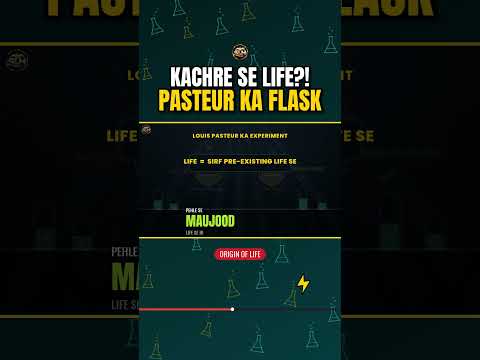
The universe is ~13.8 billion years old (Big Bang), the earth ~4.5 billion years. Life appeared ~4 billion years ago. Oparin & Haldane: the first life arose from non-living organic molecules (chemical evolution). Spontaneous generation was disproved by Louis Pasteur.
Miller's experiment (1953)
S.L. Miller passed an electric discharge through CH₄, H₂, NH₃ and water vapour at 800°C → amino acids were formed. This supports chemical evolution.
Paleontological evidence
Fossils in rock layers — organisms of different ages; some extinct (e.g., dinosaurs). Life-forms changed over time.
Homologous organs (divergent evolution)
Same structure, different function: forelimbs of whale, bat, cheetah and human; heart, brain. Plants: thorn of Bougainvillea and tendril of Cucurbita.
Analogous organs (convergent evolution)
Different structure, same function: wings of butterfly and bird; eye of octopus and mammal; flippers of penguin and dolphin; sweet potato (root) and potato (stem).
Natural selection – examples
Natural selection in peppered moths (England, effect of industrial pollution on moth colour): in the 1850s, before industrialisation, white-winged moths were more numerous; after industrialisation (1920) dark-winged moths became more numerous. Herbicide/pesticide resistance, antibiotic resistance — evolution due to anthropogenic action.
Adaptive radiation
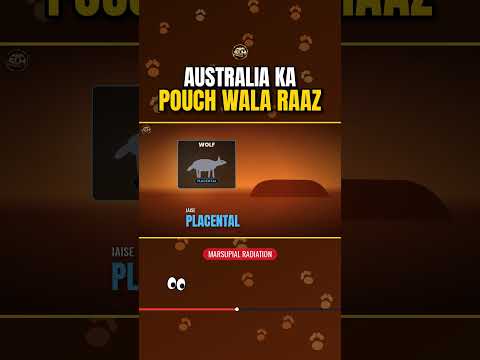
New forms evolving by radiating from one point into different habitats. Darwin's finches (Galapagos), Australian marsupials. Convergent evolution between placental mammals and marsupials.
Darwin's theory
Branching descent + natural selection. Fitness = reproductive fitness. Alfred Wallace also reached the same conclusion. Lamarck: use and disuse (giraffe's neck) — no longer accepted.
Mutation theory
Hugo de Vries (evening primrose): change through mutation — sudden, large steps (saltation). Darwin's variations were small and directional.
Hardy–Weinberg principle
Allele frequencies in a population remain constant from generation to generation: p² + 2pq + q² = 1. Factors that change them: gene migration / gene flow, genetic drift (founder effect), mutation, genetic recombination, natural selection.
Types of natural selection
Stabilising (more individuals at the mean value), directional (towards one extreme), disruptive (towards both extremes).
Brief history
Jawless fish ~350 mya; lobefins (coelacanth) → first amphibians; reptiles → dinosaurs; dinosaurs disappeared ~65 mya; mammals expanded.
Human evolution
Dryopithecus, Ramapithecus (~15 mya) → Australopithecines (~2 mya, East Africa) → Homo habilis (first human-like, 650–800 cc, did not eat meat) → Homo erectus (~1.5 mya, 900 cc, ate meat) → Neanderthal (1400 cc, buried their dead) → Homo sapiens (arose in Africa). Agriculture began ~10,000 years ago.
The concept in depth — the why and the how. Everything stays within the NCERT syllabus.
Homology vs analogy: which direction of evolution?
Homologous organs (forelimbs of whale, bat, cheetah, human; thorn of Bougainvillea and tendril of Cucurbita) — same structure/origin, different function → divergent evolution and common ancestry. Analogous organs (wings of butterfly and bird; eyes of octopus and mammals; flippers of penguin and dolphin; sweet potato (root) and potato (stem)) — different structure, same function → convergent evolution, due to similar habitat.
Moths and pollution — selection, not mutation
Dark moths were not 'created' after industrialisation; both types of moths already existed. Pollution killed the lichens and tree trunks turned dark, so the environment 'selected' the dark moths. Lichens are indicators of pollution. Similarly, the use of antibiotics/pesticides causes resistant microbes or insects to increase through selection — this is evolution by anthropogenic (human) action, and it links to antibiotics in Chapter 8.
Adaptive radiation and convergence together
Many forms evolving from one ancestor in one area for different habitats = adaptive radiation (Darwin's finches; Australian marsupials). Similar forms in Australian marsupials and placental mammals (e.g. marsupial wolf and placental wolf) — two separate adaptive radiations looking alike — is an example of convergent evolution.
Hardy–Weinberg: the 'nothing has changed' equation
In a population, allele frequencies (p, q) remain constant from generation to generation if there is no disturbing factor: p² + 2pq + q² = 1. Five factors disturb the equilibrium: gene migration (gene flow), genetic drift, mutation, genetic recombination and natural selection. If the measured value differs from the equilibrium, it means evolution is taking place. The founder effect is a form of drift in which the allele frequency of a small new population changes.
Three patterns of selection
Stabilising: middle (mean) individuals are favoured → variation decreases. Directional: shift towards one extreme. Disruptive: both extremes are favoured, middle ones decrease → two peaks form. Identify the type from the shape of the curve in the graph.
Darwin vs de Vries
Darwin: small, directional variations and gradual change. Hugo de Vries, working on evening primrose, proposed that large, sudden variations — mutations — cause evolution; mutations are random and directionless. He called a single-step large mutation saltation. According to the present understanding, variation (mutation + recombination) and natural selection work together.
Common confusions — cleared up
Homologous vs Analogous organs
Homologous: same origin/structure, different function (divergent). Analogous: different origin/structure, same function (convergent).
Lamarck vs Darwin
Lamarck: acquired characters are inherited through use and disuse (giraffe's neck). Darwin: variations already exist; natural selection picks the fit ones from among them.
Genetic drift vs Gene flow
Gene flow = movement of alleles into/out of a population (migration). Genetic drift = change in allele frequency by chance, especially in small populations.
Adaptive radiation vs Convergent evolution
Adaptive radiation: many different forms arise from one ancestor (divergence). Convergent: organisms from different ancestors come to look similar.
Video

▶ Evolution Class 12 Biology | Chapter 6 One Shot Animated Video | NCERT + PYQs | Board Exam 2027 · 31 min
1-minute revision Shorts



Important questions with answers
Q1. What is the difference between homologous and analogous organs?
Homologous organs have the same basic structure and origin but different functions (e.g., the flipper of a whale and the human hand) — they show divergent evolution. Analogous organs have different structures but the same function (e.g., the wings of a butterfly and a bird) — they show convergent evolution.
Q2. What does the Hardy–Weinberg principle state?
In a large, randomly mating population with no disturbing factors, allele frequencies and genotype frequencies remain constant from generation to generation: p² + 2pq + q² = 1. Gene flow, genetic drift, mutation, recombination and natural selection disturb this equilibrium.
Q3. How did industrial pollution change the colour of moths in England?
In England, before industrialisation, tree trunks were covered with white lichens, so white moths survived. Pollution darkened the trunks, so dark moths stayed hidden from predators and their numbers increased. This is an example of natural selection.
Q4. Give an example of adaptive radiation.
Darwin's finches of the Galapagos — finches with different beaks evolved from one seed-eating finch. Australian marsupials also radiated from one ancestral stock into different habitats.
UP Board previous year questions (2022–2026)
These questions are from real UP Board Intermediate papers (copies from a third-party archive, read and verified by SLH). Also shown: in how many 2022–2026 papers (different sets) a question from this topic appeared. See year-wise papers →
- “Who proposed the theory of 'Natural Selection'? (A) Mendel (B) Lamarck (C) Darwin (D) De Vries”
UP Board 20261 marksQuestions from this topic: 8 papers (2024, 2025, 2026) - “Name the gases which were used by S.L. Miller in the experiment of origin of life.”
UP Board 20261 marksQuestions from this topic: 5 papers (2024, 2025, 2026) - “Distinguish between convergent evolution and divergent evolution.”
UP Board 20263 marksQuestions from this topic: 5 papers (2024, 2026) - “Write an explanatory note on: Hardy-Weinberg principle.”
UP Board 20262.5 marksQuestions from this topic: 5 papers (2024, 2026) - “What is adaptive radiation? Describe it with the help of a suitable example.”
UP Board 20263 marksQuestions from this topic: 5 papers (2024, 2025, 2026) - “What do you understand by: Australopithecines”
UP Board 20243 marksQuestions from this topic: 4 papers (2024) - “What is evolution? Write two evidences of evolution.”
UP Board 20263 marksQuestions from this topic: 3 papers (2025, 2026)
Practice quiz
Tap an option — get instant right/wrong feedback and an explanation. Wrong answers are saved in "My mistakes".
1. What was formed in Miller's experiment?
2. What are the thorn of Bougainvillea and the tendril of Cucurbita?
3. The wings of a butterfly and a bird are examples of which type of evolution?
4. Who proposed the mutation theory?
5. Which is the Hardy–Weinberg equation?
6. Where were Darwin's finches found?
7. Who was the first human-like hominid?
8. Who disproved the theory of spontaneous generation?
Quick revision checklist
Before the exam — try explaining each topic aloud for 1 minute. If you get stuck, reread it in the notes above.
- Origin of life
- Miller's experiment (1953)
- Paleontological evidence
- Homologous organs (divergent evolution)
- Analogous organs (convergent evolution)
- Natural selection – examples
- Adaptive radiation
- Darwin's theory
- Mutation theory
- Hardy–Weinberg principle
- Types of natural selection
- Brief history
- Human evolution